
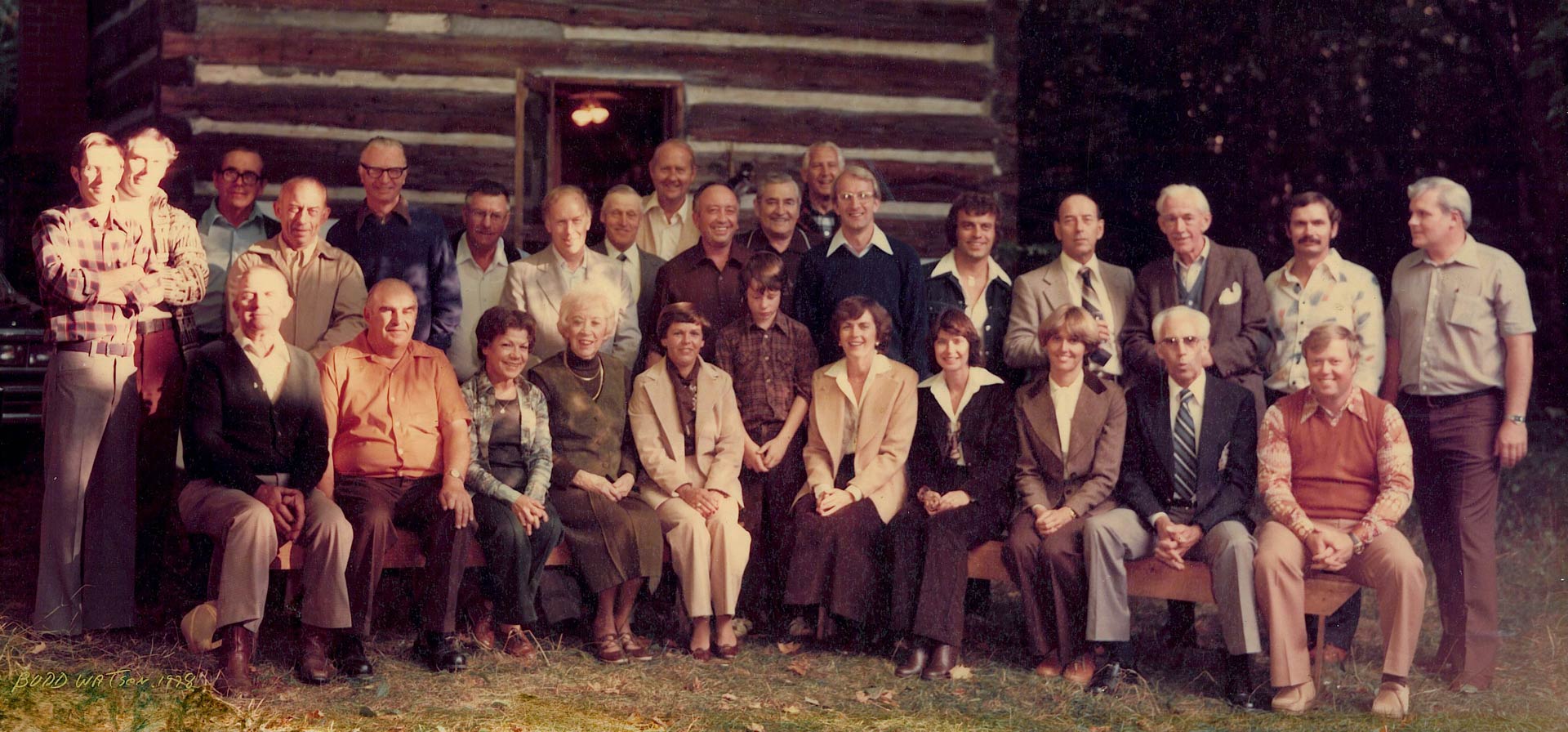
Left to Right Back Row: ? , Gerry French, Alex currie, Jim Quinn (CIBC Bank Manager, deceased), Bill Laharuo (developer of Horseshoe), Ken Knox (local councillor), Hon. Frank Mile (MNR, deceased)r, ?, MNR Bill Foster, John Copeland (deceased), Grand Dunn, Jim Robertson, George Taylor MPP for the area), Bill Player, Charles Seagram ( lawyer for Copeland, deceased), Don Campbell, MNR Dan Mansell, MNR? Front Row Seated: Ernie Potier, Lorne Sheffield, pat Kirton, Elsie Copeland, Janet Copeland (wife of John), Cameron Copeland, Barbara Taylor (wife of George), Joan Player(wife of Bill), Brenda Darby, Morris Darby (Reeve of Tiny twp deceased) , MNR Alex Smith. Bill Foster was the Deputy Minister of Natural Resources.The above photo was taken at the time of the Ministry of Natural Resources purchase of the Copeland Forest.
The photo above was taken at the time of the Ministry of Natural Resources purchase of the Copeland Forest in 1978.
The Copeland Forest Friends Association was established in 2015 to: Conserve the natural integrity of Copeland Forest while facilitating compatible recreational use.
History of the Copeland Forest Friends Association
Intro to the Formation of the Copeland Forest Friends
By David Kennedy
The formation of the Copeland Forest Friends was a number of years in the making. In 1978 when the Ministry of Natural Resources purchased the Forest, the Ministry engaged in active research and consultation leading to the 1982 resource management plan. Over time, the use of the forest began to shift from natural resource activities such as hunting and fishing to a wide range of recreational activities. New housing developments in the area increased the popularity of the forest.
Under provincial legislation and policies, the Ministry of Natural Resources does not have authority to undertake logging in southern Ontario. So, the forests and lands in the Copeland are protected and began to mature in a natural way leading to creation of “old growth” effect. Many people began to value the Copeland not just for its recreation potential but also for its untouched ecological values.
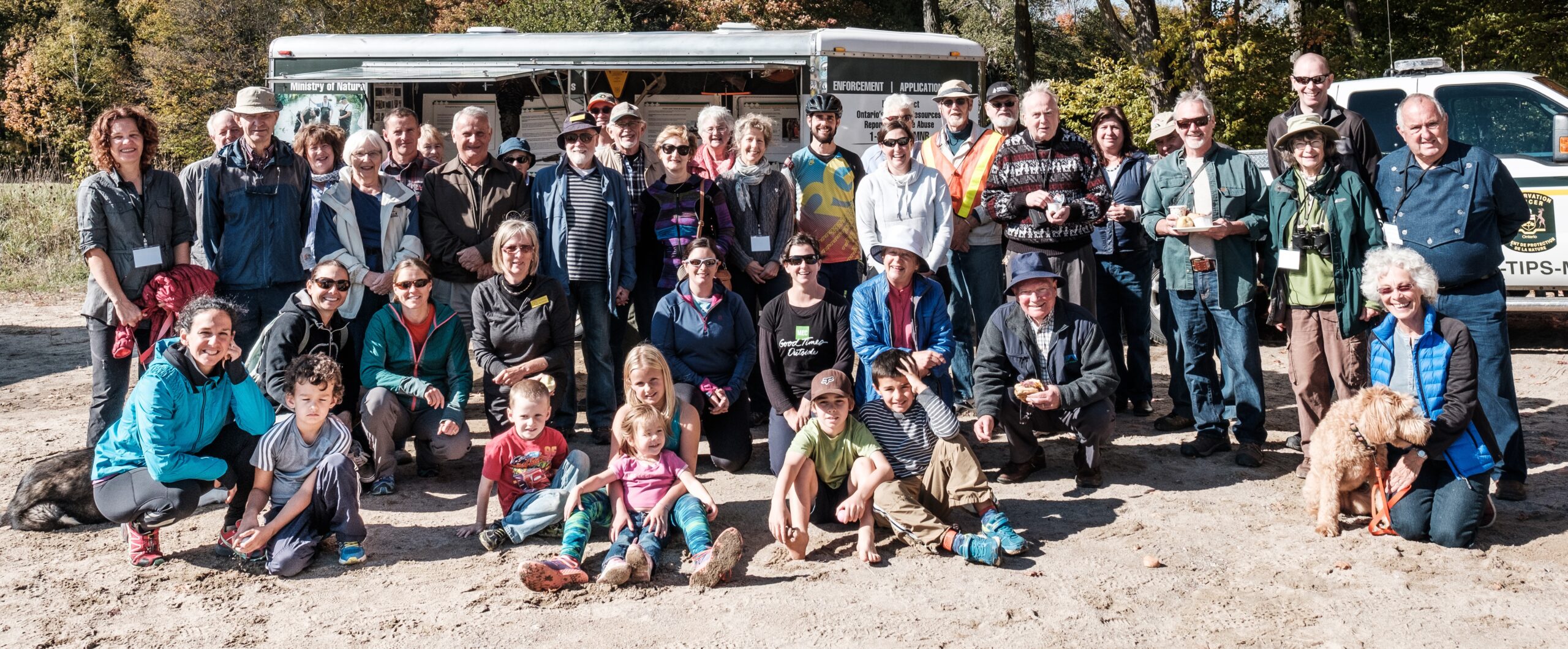
Part 1: The Couchiching Conservancy Initiative
The Couchiching Conservancy had identified the Oro Moraine as a key priority area for conservation. However, the Conservancy did not have the resources to acquire much conservation land in this area due to its high cost for potential development. A few parcels were acquired by donation, most notably, East Coulson Swamp, and, more recently, some landowners have entered into conservation agreements.
Already, though, the Copeland Forest was in public ownership and a significant portion of the Copeland Forest is on the edge of the Oro Moraine. Under the leadership of the late Ron Reid and David Kennedy, the Conservancy developed a grant submission to the Trillium Foundation to ensure the natural habitat of the Copeland Forest was protected and preserved for future generations. This was very crucial as a number of new housing developments were then in the planning stage and would potentially impact on the Copeland Forest.
The Trillium Foundation grant proposal had two activities: 1) the development of a four season biological inventory of the Copeland Forest and 2) public consultation with all the users of the Forest. This grant was awarded in 2010 and work began on both activities.
Judith Jones and John Morton undertook the biological inventory which updated previous work done for the Ministry of Natural Resources back in 1982 for the resource management plan for the Copeland Forest. The Jones and Morton inventory was submitted in early 2012 and highlighted:
- The need to take action to protect sensitive areas and species and wildlife values
- The need to take action to address human safety, including trail signage and maps
- The need to continue to investigate and monitor species at risk and remove old structures while preserving the history of the forest.
See the report on the web site at Jones and Morton Report
At the same time, the Conservancy hired Dorthea Hangaard as project coordinator for the Copeland Forest Project. She initiated consultations with all the user groups in separate meetings and then, the Conservancy hosted a large consultation meeting for all groups. This consultation was facilitated by Gord Ball, a recognized expert facilitator. Turn-out for this meeting was close to 150 people!
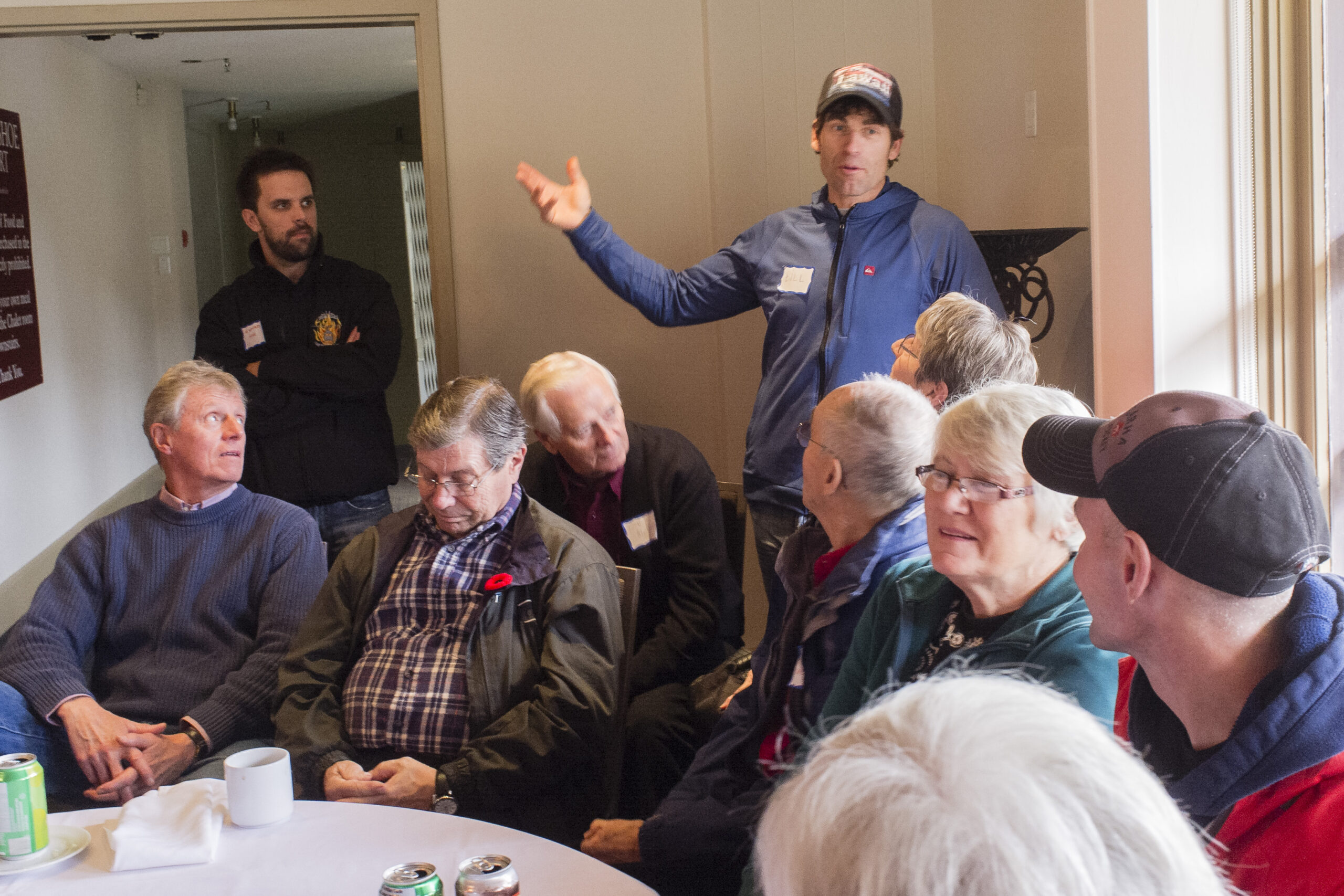
The large meeting broke into smaller groups and these groups reported back at the end of the meeting. Some of the key issues identified were:
- Long term ecological sustainability, water quality and water issues, keep the forest natural, invasive species, deer yard management
- Trail marking, respect for other users, sustainable trails, compatibility and safety for mixed use
- Beaver management, garbage and manure, active forest management
- Long term management of the Copeland through the creation of the “Friends of Copeland”.
See the report on the consultation, the Copeland Open Forum Report (November 2012).
Part 2 of the Copeland Founding: The Stewardship Committee
To follow-up on the consultation initiated and facililitated by the Couchiching Conservancy, the Copeland Forest Stewardship Committee was formed to submit recommendations to the Ministry of Natural Resources.
The Stewardship Committee was comprised of two representatives from each of the major user groups/interest areas:
Frieda Baldwin (Hikers)
Sean Billing (Horseshoe Resort)
Don Budge (Snowsports)
Neil Craig (Resident-at-large)
Ted Duncan (Anglers and Hunters)
Mary Anne Greatrix (Mountain biking)
Ted Greatrix (Mountain biking)
David Kennedy (Couchiching Conservancy)
Dave Lord (Naturalists)
Bob Marshall (Hikers)
Carol McIsaac (Horseback riders)
Sandy McLoughlin (Horseback riders)
Dave McNabb (Resident-at-large)
Bob Miller (Orienteering)
Bill Trayling (Snowsports)
Mike VanderJagt (Anglers and Hunters)
Ingrid VanderMarel (Couchiching Conservancy)
Pat Woodford (Naturalists)
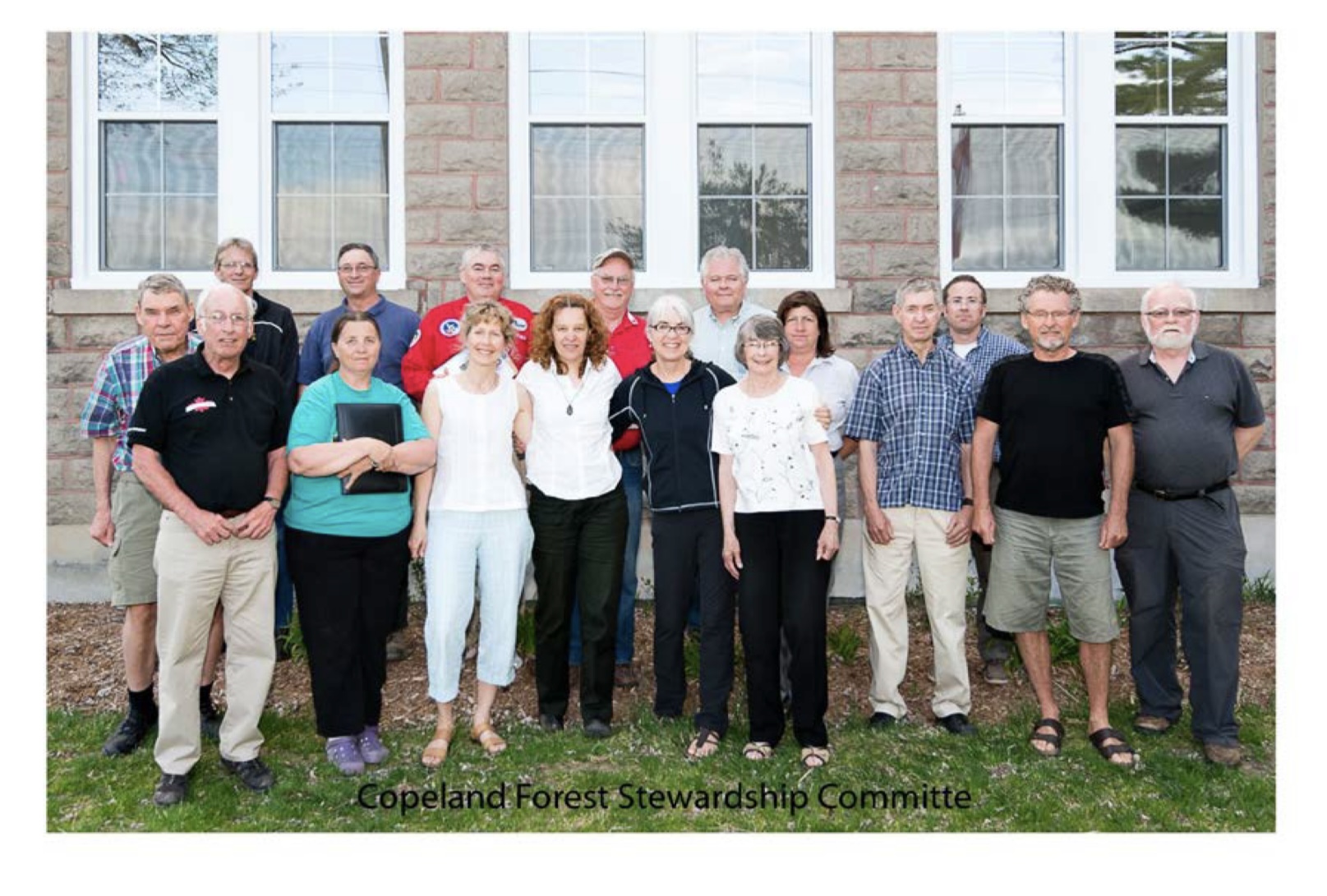
Photo: The Stewardship Committee (courtesy of David Kennedy)
Four key areas were identified for action:
- Ecology and Sustainability of the Forest
- Trails in the Copeland Forest
- Education and Legacy in the Copeland Forest
- Governance of Copeland Forest.
In June 2013, the Ministry accepted the recommendations and the stewardship committee continued to meet to work on the development of the new Copeland Friends Association and the project priorities identified in the consultation and June 2013 report to the Ministry.
The Stewardship Committee worked on the establishment of the Copeland Forest Friends Association as a non-profit corporation. This new corporation was designed to ensure the well-being of the forest and representation of the major user groups on the board and support active involvement of all users in the work of the Association. The corporation received its incorporation papers in 2015.
The new Association also developed a special partnership agreement with the Ministry of Natural Resources and Forestry to support ongoing collaboration and stewardship of the Copeland Forest. This agreement put in place a Memorandum of Understanding (MOU) between the Friends and the Ministry and the memorandum of understanding was signed in September 2015.
The new Copeland Forest Friends Association celebrated its launch at a September 2015 Fall Fair which was very well attended by partner organizations, residents and forest users.
Part 3: The CFFA Early Accomplishments.
The first two chapters of the story of the Copeland Friends formation told of the conference convened by the Couchiching Conservancy where the objectives and goals of a new organization centered on the Copeland Forest were discussed.
The next organizational milestone for the CFFA was the successful application for charitable status. In 2017, two years after the CFFA was incorporated, changes to the bylaws were written to facilitate the application for charitable status. In 2020 the application was approved and the CFFA was now able to receive donations and issue tax receipts.
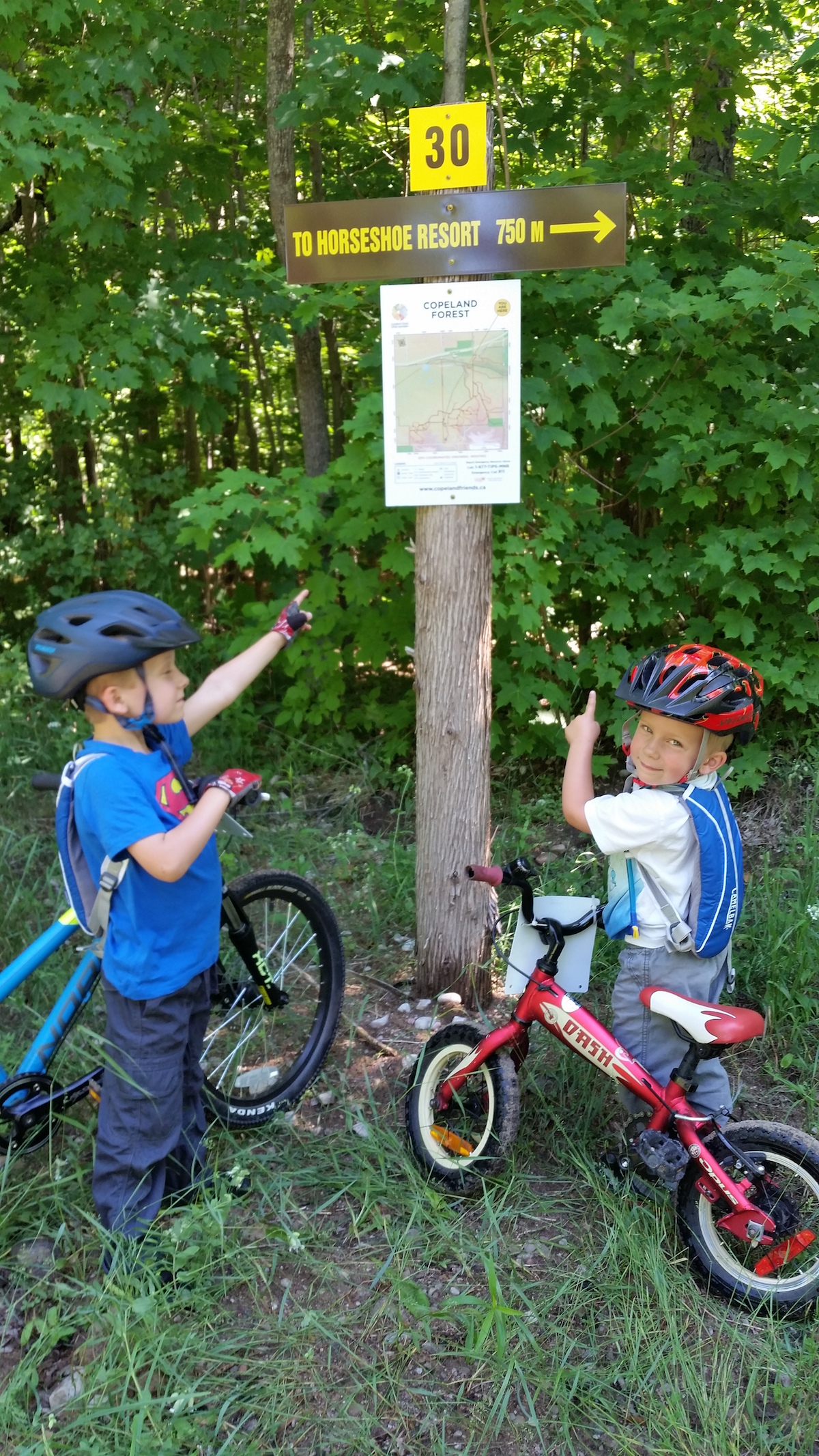
One early accomplishment of the CFFA was the mapping and placement of signage at all the key trail intersections. In addition to the new signage a bochure describing the forest and the Association was developed and widely spread out to the community.
The current Board and membership would like to thank the many founders of the CFFA who made our organization possible.
Reports
Download the Copeland Forest Stewardship Committee Stewardship Recommendations to the Midhurst District MNR, June2013.
Download a summary of the Copeland Open Forum Report generated at the November 3, 2012 meeting.
There are two sets of reports available on the Copeland Forest. First, there are a series of reports commissioned by the Ministry of Natural Resources following the purchase of the Forest in 1979. This led to 3 main reports in 1979-1980.Then, in 2010, the Couchiching Conservancy with the support of the Trillium Foundation undertook a project to examine the Copeland Forest and engage the public in discussion of stewardship. This process led to two reports in 2012-2013.
Ministry of Natural Resources: 1979-1980
- Irene Golas, The Copeland Forest Resource Management Area – A History: 1800 to 1978, Ministry of Natural Resources, 1980/
- Spittal, Report on Archaeological Survey of the Copeland Forest, Ministry of Natural Resources, 1979
- S.W. Bobbette, Copeland Forest Resource Management Area Botanical Inventory, Ministry of Natural Resources, 1979
Couchiching Conservancy: 2012-2013